

Porsche Active Suspension Management, commonly known as PASM, represents the brand’s commitment to combining driving comfort with unparalleled performance. This sophisticated system enhances the driving experience by offering dynamic suspension adjustment, tailoring the vehicle’s behavior to both the driver’s desires and the demands of the road. By continually adjusting the damper forces, PASM works to ensure that stability and comfort are not mutually exclusive—even under varying driving conditions.

The system intelligently balances a comfortable ride during long journeys with the precise and agile handling expected on more vigorous drives. Through its operation modes, PASM caters to different scenarios, allowing for a customized driving experience. Whether cruising through city streets or taking on winding mountain passes, PASM adapts to deliver optimum performance and comfort. The seamless integration of this suspension management technology into Porsche vehicles is a testament to the automaker’s dedication to innovation—consistently refining PASM to meet the evolving expectations of drivers.
Key Takeaways
- PASM adjusts suspension settings for both comfort and performance.
- It features selectable modes tailored to various driving situations.
- The system reflects Porsche’s ongoing innovation in automotive technology.
Understanding PASM Technology
Porsche Active Suspension Management (PASM) is an innovative technology that significantly enhances both the comfort and performance of Porsche vehicles. It customizes the driving experience by adjusting the damping forces on each wheel to suit the driving conditions.
The Science Behind PASM
The PASM system uses an array of sensors to monitor driving conditions continuously and adjusts the dampers in real time. These sensors measure variables such as vehicle speed, lateral acceleration, steering angle, and road surface conditions. Information gathered is relayed to a control unit that processes the data and sends precise commands to adjust damping force via valves within the dampers.
Components of the PASM System
PASM is comprised of several key components that work in harmony:
- Sensors: They collect data about the car’s movement and the road.
- Control Unit: This is the system’s brain, which makes decisions based on the sensor data.
- Dampers: Equipped with adjustable valves, they fine-tune the suspension stiffness.
- Software Algorithms: These translate sensor readings into actionable adjustments to the dampers.
PASM in Different Porsche Models
The PASM technology is not one-size-fits-all; it’s tailored for specific models to enhance their unique characteristics. For instance, the Porsche 911 utilizes PASM to balance its legendary performance with everyday usability. In the Cayman and Boxster, PASM helps in delivering a more dynamic driving experience. The system also caters to the needs of larger models like the Macan, Panamera, and Cayenne, adjusting the ride to offer sportiness without compromising on comfort.
PASM Operation Modes
Porsche’s Active Suspension Management (PASM) adapts the damper forces to both driving style and road conditions, offering three distinct driving modes: Normal Mode, Sport Mode, and Sport Plus Mode. Each mode fine-tunes the vehicle’s driving characteristics differently.
Normal Mode
In Normal Mode, PASM provides a balance between comfort and performance. It is designed for everyday driving, where it offers a smoother ride over a variety of road surfaces. This mode automatically adjusts the dampers to absorb road bumps, delivering a more comfortable driving experience without sacrificing handling.
Sport Mode
When the Sport Mode button is pressed, PASM stiffens the damper settings. This mode is suitable for drivers who desire a more dynamic driving experience. The suspension setup becomes tighter, which reduces body roll and provides better road feedback. This results in enhanced handling and stability during more spirited driving on winding roads.
Sport Plus Mode
Sport Plus Mode further increases the vehicle’s performance capabilities. It is designed for the most enthusiastic driving on tracks or when very sporty road handling is desired. In this mode, the PASM system maximizes the connection between the tires and the road surface, providing the stiffest damper settings for precision and grip. This mode is best reserved for high-performance situations where the driver can fully exploit the Porsche’s capabilities.
Benefits and Impact on Driving Dynamics

Porsche’s Active Suspension Management (PASM) innovatively enhances the driving experience by optimizing comfort, handling, and adaptability to diverse driving scenarios. It maintains a fine balance between a sporty drive and a comfortable ride.
Comfort and Convenience
PASM significantly improves ride comfort by actively adjusting damper forces to match the conditions of the road surface. This system minimizes the impact of road surface imperfections, ensuring a smoother ride that allows drivers and passengers to enjoy long trips with less fatigue.
Handling and Stability
The dynamic handling and stability provided by PASM contribute to a more engaging and controlled driving experience. The system’s ability to manage grip during cornering helps maintain a poised posture of the vehicle, giving the driver a heightened sense of control and confidence even at higher speeds or during abrupt maneuvers.
Adaptability to Driving Scenarios
PASM’s versatility shines in its adaptability. Whether the driver prefers a nimble driving style or a more laid-back cruise, the system adjusts to deliver the optimal balance of performance and comfort. It seamlessly transitions to accommodate aggressive driving tactics or more conservative commuting styles, depending on the selected mode.
PASM and Vehicle Settings
Porsche’s Active Suspension Management (PASM) is a highly sophisticated system that enhances driving dynamics by adjusting the ride height and damper stiffness. It ensures optimal ground clearance and wheel-to-road contact, which are vital for maintaining reduced body movement and a smooth ride over suspension bumps.
Adjusting Ride Height
The PASM system allows for the adjustment of ride height, which is the distance between the car’s chassis and the road surface. This is particularly important as it can affect the vehicle’s aerodynamics, fuel efficiency, and ground clearance. Porsche models equipped with PASM and air suspension can lower or raise the vehicle, adapting to various driving conditions and preferences:
- Lowered position: Enhances stability at high speeds by reducing the vehicle’s center of gravity.
- Raised position: Increases ground clearance to handle rough terrains and prevent undercarriage damage.
Tuning Damper Stiffness
PASM constantly tunes the damper stiffness to match driving conditions, delivering a delicate balance between comfort and sportiness. This electronic active damping system adjusts the shock absorbers to provide:
- Firmer setting: Ideal for a spirited driving experience or track days, allowing for precise control with minimal body roll.
- Softer setting: Provides a more comfortable ride during extended trips or while driving on uneven surfaces, absorbing road irregularities effectively.
Advanced Integrations and Future of PASM
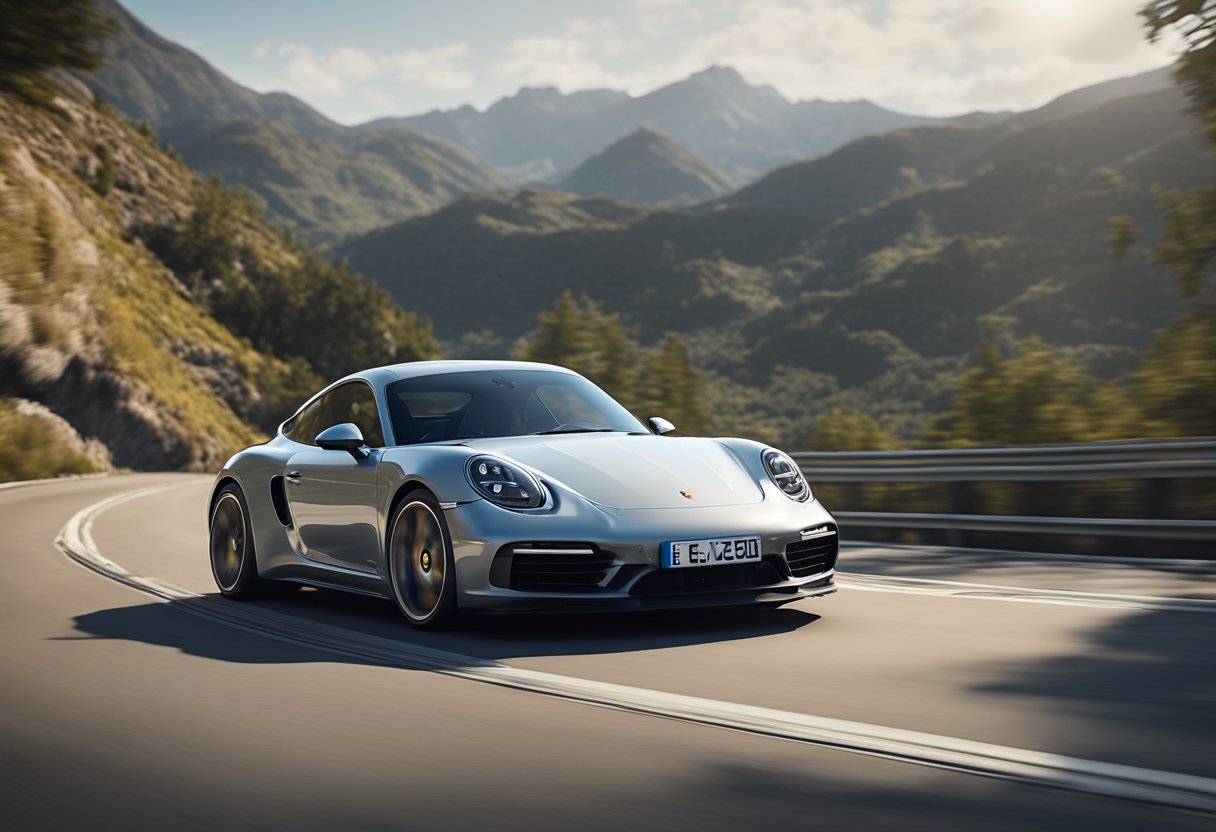
Porsche’s Active Suspension Management (PASM) system has become a staple in delivering both driving comfort and dynamic performance. As it continues to evolve, its integration with other vehicle systems and future innovations stand as pivotal areas in the development of Porsche’s adaptive suspension technologies.
Integration with PSM and PTV Systems
PASM is designed to work seamlessly with Porsche Stability Management (PSM) and Porsche Torque Vectoring (PTV) systems. These integrations allow for a synchronized approach to vehicle stability and agility. PASM’s constant monitoring and adjustment of damper forces enhance the effects of PSM by reducing body roll and maintaining optimal traction, while PTV benefits from PASM’s precise control when it applies brake pressure to individual wheels, which in turn, optimizes steering response and cornering.
Evolution and Innovations in Active Suspension
The future of PASM lies in its continuous evolution and adoption of innovative technologies. Advancements in active chassis systems could introduce even more adaptable components that respond in real-time to changing driving conditions. This may include new features such as predictive suspension adjustments that utilize road surface data and AI algorithms to preemptively modify damping. Porsche’s commitment to future technologies indicates that PASM will likely encompass enhanced electronic control systems that further blur the line between comfort and performance driving experiences.
Note To Reader: Car Nut Chronicles is reader supported. We may post content which contains links to affiliate sites such as Amazon where we may earn a small commission. This helps us keep the lights on and the articles you enjoy being produced. Thank you for your readership, we appreciate you!


How to Set Quadrajet Idle Mixture Screws on a Classic Chevy (and Get the Choke Right)
How to set Quadrajet idle mixture screws on a classic Chevy with a vacuum gauge, then set the divorced or…

2000-2003 Nissan Maxima Brake Lights Stay On: Cruise Fail and Pedal Stopper Fix (46584-5P010)
On 2000-2003 Nissan Maximas and Infiniti I30/I35 cars, cruise that will not set plus brake lights that stay on and…

Classic Car Power Steering Leak? How to Find and Fix a Leaking Saginaw Pump or Steering Box
Classic car leaking power steering fluid? On most Saginaw systems the culprit is a shrunken reservoir O-ring, a loose return…


Hidden Gem: Tucker 48 Auction – No. 1021 Heads to Sale
Rarity in the Spotlight: Tucker 48 No. 1021 – Headlining Kissimmee 2024 Auction with a Hefty Asking Price A piece of automotive history is set to grace the floor in Kissimmee 2024 with the rare Tucker 48 auction time already set. Serial number 1021, is not just another vintage car;…

Outpacing Time: The Iconic Dodge Charger
Discover the timeless allure of the Dodge Charger. From its iconic roots in the 1960s to the modern-day roar of HEMI V8 engines, explore the evolution of this American muscle legend. Uncover the perfect blend of power, design, and technology that defines the Charger’s enduring legacy. Buckle up for a…

Restored Toyota Chinook Auctioned for over $50,000!
This Fully Restored 1978 Toyota Chinook is The Perfect Blend of Nostalgia and Off-Road Capability In today’s burgeoning camper market, the allure of outdoor adventures has never been stronger. Amid the surge in popularity of camper vans, this restored Toyota Chinook stands out as a unique blend of retro charm…

2018 Ford GT Draws A Unique And Vibrant Crowd
FOR SALE: Absolutely Stunning 222-Mile 2018 Ford GT If speed and style are what you’re after, look no further than this stunning 2018 Ford GT. With only 222 miles on the odometer, this American-made beauty is a rare find that promises both performance and prestige. Specifications: Make: Ford Model: Ford…

Monte Carlo Barn Find Will Now See Light For First Time In 30 Years!
Posted on Facebook, This Monte Carlo Has Not Been A Road Runner In Three Decades! Chevrolet entered the realm of personal luxury cars with the introduction of the Monte Carlo in 1970. Sharing its platform with the Pontiac Grand Prix and incorporating elements of the mid-size Chevy Chevelle, it boasted…

Rev up your inbox – Subscribe to The Car Nut Chronicles Newsletter now!
Attention Car Nut Chronicles readers! We are excited to announce the launch of our new weekly Car Nut Chronicles newsletter! Stay up-to-date on the latest in the automotive industry, get insider tips and tricks, and receive exclusive content delivered straight to your inbox every week. The Car Nut Chronicles newsletter…